*Hey, at least it's not Petrino!

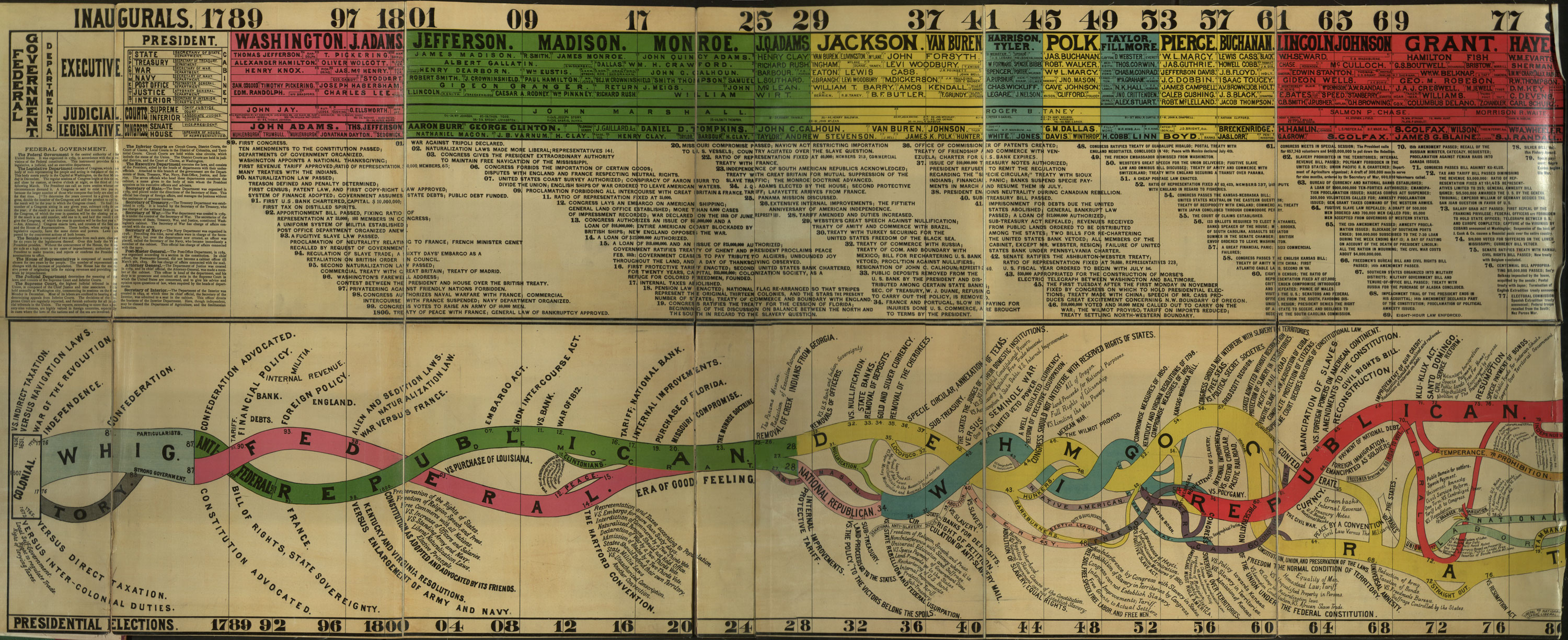
When Lincoln sets about abolishing slavery–out of the goodness of his heart, essentially–his first adversaries turn out to be the radical abolitionists, in whose number the movie is careful not to place the great emancipator. Before anything can happen, in other words, the first order of business is to steamroll men of principle like Thaddeus Stevens and James Ashley into doing what Lincoln wants them to do. Stevens is too wildly idealistic and unrealistic to be allowed to speak his mind; he isn’t quite a caricature—if only because Tommie Lee Jones brings too much gravitas to the part—but he’s the uncle everyone is embarrassed of, even if they love him too much to say so. He’s not a leader, he’s a liability, one whose shining heroic moment will be when he keeps silent about what he really believes. And James Ashley is portrayed as too cowardly and weak to even bring the amendment to a vote (while casting David Costabile for the part speaks volumes for what kind of a role they think it is). The two radical abolitionists in the film, in other words, cannot be trusted to take charge of a radical project like the abolition of slaves. A radical and revolutionary change must be placed in the hands of a compromising moderate.Lincoln Against the Radicals

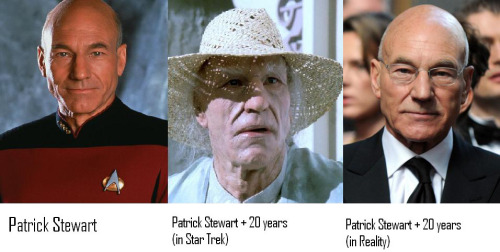
But I think The Next Generation's underlying appeal went beyond the image of happy, smart people saving you a seat in Ten Forward. As an example here, think about the Harry Potter series. One of the reasons J.K. Rowling's books exerted such an appeal over every sentient creature on earth is that they resolved, indeed fused, a cultural contradiction. She took the aesthetic of old-fashioned English boarding-school life and placed it at the center of a narrative about political inclusiveness. You get to keep the scarves, the medieval dining hall, the verdant lawns, the sense of privilege (you're a wizard, Harry), while not only losing the snobbery and racism but actually casting them as the villains of the series. It's the Slytherins and Death Eaters who have it in for mudbloods, not Harry and his friends, Hogwarts' true heirs. The result of this, I would argue, is an absolutely bonkers subliminal reconfiguration of basically the entire cultural heritage of England. It's as if Rowling reboots a 1,000-year-old national tradition into something that's (a) totally unearned but (b) also way better than the original. Of course it electrified people.Computer Love
Star Trek does something similar, though with an American contradiction that's arguably even more fundamental. It was already possible, by the early '90s and actually long before them, to trace the terms of the current partisan divide in America. Conservatives — think in Jonathan Haidt–ish terms here — value tradition, authority, and group identity; liberals value tolerance, fairness, and care. Or whatever; you can draw the distinctions however you'd like. The point is, The Next Generation depicts a strict military hierarchy acting with great moral clarity in the name of civilization, all anti-postmodern, "conservative" stuff — but the values they're so conservatively clear about are ideals like peace and open-mindedness and squishy concern for the perspectives of different cultures. "Liberal" ideals, in other words. You could say, roughly, that the Enterprise crew is conservative as a matter of method and liberal as a matter of goal. They sail through the universe with colonialist confidence sticking up for postcolonial ideals. I mean, Starfleet has a Prime Directive … but it's explicitly non-interventionist! This is so weird that it's almost hard to notice; your mind just sort of slides over it. But it's fascinating in numberless ways. Picard is both indisputably the most patriarchal Star Trek captain and indisputably the least likely to punch anyone in the face. No one is more individualist than the individuals of the Enterprise, but their individualism has led them to reject most forms of private property (because it actually holds them back, they're so boldly individualistic) and embrace ultra-centralized health care. The show is able to indulge a serious jones for the classical Western canon — Shakespeare, Mozart, et al. — without really running against the grain of multiculturalism at all, at least by late-'80s standards. Data will be listing some violinists whose style his programming can mimic, and some of them will be Heifetz and some of them will be aliens a guy just made up for the script. It's totally nuts, but it's also a fantasy of the American psyche that, if you can get into it, makes a lot of fine things suddenly seem possible, and makes some debilitating anxieties just sort of fall away.
So, laws emerge from illegal activity. This creates a fundamental incoherence in the very idea of modern government, which assumes that the state has a monopoly of the legitimate use of violence (only the police, or prison guards, have the legal right to beat you up.) It’s okay for police to use violence because they are enforcing the law; the law is legitimate because it’s rooted in the constitution; the constitution is legitimate because it comes from the people; the people created the constitution by acts of illegal violence. The obvious question, then, is: how does one tell the difference between “the people” and a mere rampaging mob? There is no obvious answer.

Insofar as there is a potential for constituent power then, it can only come from purveyors of violence. The supervillains and evil masterminds, when they are not merely indulging in random acts of terror, are always scheming of imposing a New World Order of some kind or another. Surely, if Red Skull, Kang the Conqueror, or Doctor Doom ever did succeed in taking over the planet, there would be lots of new laws created very quickly, although their creator would doubtless not himself feel bound by them. Superheroes resist this logic. They do not wish to conquer the world—if only because they are not monomaniacal or insane. As a result, they remain parasitical off the villains in the same way that police remain parasitical off criminals: without them, they’d have no reason to exist. They remain defenders of a legal and political system which itself seems to have come out of nowhere, and which, however faulty or degraded, must be defended, because the only alternative is so much worse.Super Position
This is the joy of children encountering the natural world on their own terms, and more and more it is becoming a lost idyll, no longer an integral part of growing up. There are many reasons for this loss—urbanization, the changing social structure of families, ticks and mosquito-borne illnesses, the fear of stranger danger. And perhaps even environmental education is one of the causes of children’s alienation from nature.Look, Don't Touch
I know that’s a puzzling statement. You’re thinking: environmental education is supposed to connect children with nature, to get them started on a lifetime of loving and wanting to protect the natural world. Yes—that’s what is supposed to happen. But somewhere along the way, much of environmental education lost its magic, its “wildly, gladly rejoicing together.” Instead, it’s become didactic and staid, restrictive and rule bound. A creeping focus on cognition has replaced the goal of exhilaration that once motivated educators to take children outside.
I suspect that, given the opportunity, those groups would have liked nothing more than to shut down the universities. Destroy them outright. But a country claiming to have democratic values can’t just shut down its universities. That would reveal something about that country which would not support the image they are determined to portray – that of a country of freedom, justice, opportunity for all. So, how do you kill the universities of the country without showing your hand? As a child growing up during the Cold War, I was taught that the communist countries in the first half of the 20th Century put their scholars, intellectuals and artists into prison camps, called “re-education camps”. What I’ve come to realize as an adult is that American corporatism despises those same individuals as much as we were told communism did. But instead of doing anything so obvious as throwing them into prison, here those same people are thrown into dire poverty. The outcome is the same. Desperate poverty controls and ultimately breaks people as effectively as prison…..and some research says that it works even MORE powerfully.How the American University Was Killed, in Five Easy Steps

Somewhere in the middle of an episode of Louie, one of television’s most critically acclaimed comedies, I found myself sobbing uncontrollably. As Louis C.K. confessed his love to his very uninterested platonic friend Pamela, I found myself re-experiencing all the pain and rejection that came from my own dramatic failed attempt to win the girl I'd been infatuated with for over six years. This was the first time I'd cried since my cat Milhouse was put to sleep years ago. I honestly would have never thought an episode of a show like Louie could garner such a reaction from me, but the more I thought about it, the more it made sense. Louis C.K. practices a brand of 'slow comedy' on his show that is rarely seen on television or outside of the long-form improv scene in general.Louis CK, TJ & Dave, and the Power of Slow Comedy

“I don’t have an answer for which is better,” he says at the outset, acknowledging that his own sense of outrage over Breivik’s sentence—like that of many Americans—“hints at not just how different the two systems are, but how deeply we may have come to internalize our understanding of justice, which, whatever its merits, doesn’t seem to be as universally applied as we might think.”In Sentencing Criminals, Is Norway Too Soft? Or Are We Too Harsh?
This is true, and a promising place to start. The United States is uniquely punitive when it comes to sentencing compared to much of the rest of the world, whether the crime is murder or drug possession. Putting aside the death penalty, which lands us in dubious international company, in countries with life sentences on the books, prisoners are often eligible for release after a few decades. “Mexico will not extradite defendants who face sentences of life without parole,” the New York Times’s Adam Liptak noted in 2005 (Most of Latin America has no such sentence). “And when Mehmet Ali Agca, the Turkish gunman who tried to kill Pope John Paul II in 1981, was pardoned in 2000, an Italian judge remarked, ‘No one stays 20 years in prison.’ ”
Being otherkin, to this group, isn't just about resisting technology or being in touch with nature (though these, and other fantasy and new age elements, still form a large part of otherkin culture) — it's about being marginalized, ignored, laughed at, and oppressed. It's like being transgender. And as this otherkin group has transformed its language and its focus, so too has its scope widened. Otherkin identities can encompass fictional characters. Or nonliving, inanimate objects. Or even multiple identities — some fictional, some animal, all of them occupying a single body. Out of this widening comes new words: cisspecies. Transethnicity. Transablism. Transfat.
Tumblr, which has a huge, passionate social justice community — thousands of people interested in feminism, gay rights, trans rights and other interrelated issues — is a natural fit for this group of otherkin. (Other, similar communities exist on LiveJournal and the TV Tropes message boards.) Like other Tumblr users who are members of marginalized groups, otherkin start their own blogs and write about their identities and the axieties and injustices of daily life (one says she was fired for being otherkin, others talk about coming out to their friends and family). They trade support and sympathy. And they fight with people who don't buy it — more often than not, people who they think should be broadly sympathetic to their goals.


Parks then got back into his car, drove to a nearby police station and announced to the startled officers on duty, "I think I have killed some people." For several hours before the Toronto man left his home, however, and throughout the course of the attack, Parks was asleep and therefore not criminally responsible for his actions, according to five doctors and the defense lawyer at his 1988trial for the murder of Barbara Ann and the attempted murder of Dennis. After deliberating for nine hours, the jury agreed and Parks was set free. Although prosecutors at the time considered the defense "ludicrous" and appealed the judge's decision to allow the jury to consider a sleepwalking defense, the Canadian Supreme court upheld the original ruling in 1992.Somnambulant Savagery

Ice CubesIce cubes recipe
By CHRISSYG on April 14, 2010
Prep Time: 2 mins
Total Time: 2 hrs 2 mins
Yield: 2 trays
About This Recipe:
"I am publishing this recipe, because I am sure that there are other families who have members who don't know how or have forgotten how to make ice when the ice tray is empty."
Ingredients:
2 cups water ( approximately)
2 tablespoons water ( addtional if needed)
Directions:
Empty the ice cubes that are left in the trays (if there are any left) into the bin.
Take the trays over to the sink and fill them with cold water.
Place the water filled ice trays back in the freezer.
Replace the ice bin if you had to remove it.
Shut the door to the freezer.

On July 4, 1960, the Eugene (Ore.) Register-Guard rang in Independence Day with a dire Associated Press report by one Norma Gauhn headlined “American Dialects Disappearing.” The problem, according to “speech experts,” was the homogenizing effect of “mass communications, compulsory education, [and] the mobility of restless Americans.” These conformist pressures have only intensified in the half-century since the AP warned “that within four generations virtually all regional U.S. speech differences will be gone.” And so as we enter the predicted twilight of regional American English, it’s no surprise that publications as venerable as the Economist now confirm what our collective intuition tells us: “Television and the Internet are definitely doing something to our regional accents: A Boston accent that would have seemed weak in the John F. Kennedy years now sounds thick by comparison.”Northern Cities Vowel Shift
Before you start weeping into your chowdah, though, I have some news: All these people are wrong. Not about the Boston accent, necessarily; that one might really be receding. But American linguistic diversity as a whole isn’t dying—it’s thriving. Despite our gut-level hunch about the direction of the language; despite the fact that 70-cent, three-minute, off-peak, coast-to-coast long-distance calls that cost four inflation-adjusted dollars in 1970 are now free; despite cheap travel, YouTube, and the globalization of film and television, American dialects are actually diverging.

Hans used to be overwhelmed by the voices. He heard them for hours, yelling at him, cursing him, telling him he should be dragged off into the forest and tortured and left to die. The most difficult things to grasp about the voices people with psychotic illness hear are how loud and insistent they are, and how hard it is to function in a world where no one else can hear them. It’s not like wearing an iPod. It’s like being surrounded by a gang of bullies. You feel horrible, crazy, because the voices are real to no one else, yet also strangely special, and they wrap you like a cocoon. Hans found it impossible to concentrate on everyday things. He sat in his room and hid. But then the voices went away for good.Living with Voices

Fort Lupton is a city of eight thousand on the dry plains north of Denver. In a bigger place, Shaw might have been corralled into peewee football at eight or nine, and found his way among other oversized boys. But the local teams were lousy and, aside from a few Punt, Pass & Kick contests—which he won with discouraging ease—Shaw stuck to basketball. By seventh grade, he was six feet tall and weighed more than two hundred pounds. When he went in for a dunk on his hoop at home, he snapped off the pole, leaving a jagged stump in the driveway. By his late teens, his bulk had become a menace. One player knocked himself out running into Shaw’s chest; another met with his elbow coming down with a rebound, and was carried off with a broken nose and shattered facial bones. “It was bad,” Shaw told me. “One guy, we dove for a ball together, and I literally broke his back. It wasn’t that I was a dirty player. I wasn’t even trying to do it hard.”The Strongest Man in the World
Like other very large men, Shaw has a surprisingly sweet nature. His voice is higher and smaller than you’d expect, and he tends to inflect it with question marks. His face has the bulbous charm of a potato carving. “He’s almost overly friendly,” Terry Todd, a former champion weight lifter and an instructor at the University of Texas, told me. “It’s like he thinks that if he’s not you’ll be frightened of him and run away.” At six feet eight and four hundred and thirty pounds, Shaw has such a massive build that most men don’t bother trying to measure up. His torso is three feet wide at the shoulders; his biceps are nearly two feet around. His neck is thicker than other men’s thighs. “I know I’m big,” he told me. “I’ve been big my whole life. I’ve never had to prove how tough I am.”
YOUTUBE I DO NOT OWN ANY OF THESE RIGHTS SO DO NOT FUCK WIT ME

But their sanctification is not evidence of a world gone mad so much as an audience gone to lard morally, ignorant of the comic impulse’s more radical virtues. Over the past decade, political humor has proliferated not as a daring form of social commentary, but a reliable profit source. Our high-tech jesters serve as smirking adjuncts to the dysfunctional institutions of modern media and politics, from which all their routines derive. Their net effect is almost entirely therapeutic: they congratulate viewers for their fine habits of thought and feeling while remaining careful never to question the corrupt precepts of the status quo too vigorously.The Joke's on You
Our lazy embrace of Stewart and Colbert is a testament to our own impoverished comic standards. We have come to accept coy mockery as genuine subversion and snarky mimesis as originality. It would be more accurate to describe our golden age of political comedy as the peak output of a lucrative corporate plantation whose chief export is a cheap and powerful opiate for progressive angst and rage.
Psychopathy is a psychological condition based on well-established diagnostic criteria, which include lack of remorse and empathy, a sense of grandiosity, superficial charm, conning and manipulative behavior, and refusal to take responsibility for one's actions, among others. Psychopaths are not all the same; particular aspects may predominate in different people. And, although some psychopaths are violent men (and women) with long criminal histories, not all are. It's important to understand that psychopathic behavior and affect exist on a continuum; there are those who fall into the grey area between "normal" people and true psychopaths.The Startling Accuracy of Referring to Politicians as 'Psychopaths'
The question, then, is whether it is reasonable to believe that people with serious abnormalities in the way they interact with the world can be found running for (and winning) office. However unsettling as this may be, the answer seems to be yes. It's possible for psychopaths to be found anywhere -- including city hall or Washington, D.C. Remember, psychopaths are not delusional or psychotic; in fact, two of the hallmarks of psychopathy are a calculating mind and a seemingly easy charm.

The present hysteria is not a necessary or inevitable condition of life; it’s something we’ve chosen, if only by our acquiescence to it. Not long ago I Skyped with a friend who was driven out of the city by high rent and now has an artist’s residency in a small town in the south of France. She described herself as happy and relaxed for the first time in years. She still gets her work done, but it doesn’t consume her entire day and brain. She says it feels like college — she has a big circle of friends who all go out to the cafe together every night. She has a boyfriend again. (She once ruefully summarized dating in New York: “Everyone’s too busy and everyone thinks they can do better.”) What she had mistakenly assumed was her personality — driven, cranky, anxious and sad — turned out to be a deformative effect of her environment. It’s not as if any of us wants to live like this, any more than any one person wants to be part of a traffic jam or stadium trampling or the hierarchy of cruelty in high school — it’s something we collectively force one another to do.The Busy Trap
Busyness serves as a kind of existential reassurance, a hedge against emptiness; obviously your life cannot possibly be silly or trivial or meaningless if you are so busy, completely booked, in demand every hour of the day. I once knew a woman who interned at a magazine where she wasn’t allowed to take lunch hours out, lest she be urgently needed for some reason. This was an entertainment magazine whose raison d’être was obviated when “menu” buttons appeared on remotes, so it’s hard to see this pretense of indispensability as anything other than a form of institutional self-delusion. More and more people in this country no longer make or do anything tangible; if your job wasn’t performed by a cat or a boa constrictor in a Richard Scarry book I’m not sure I believe it’s necessary. I can’t help but wonder whether all this histrionic exhaustion isn’t a way of covering up the fact that most of what we do doesn’t matter.

The Star Wars prequels, whatever their failings in other respects, dramatise the corporatist dynamic rather well. Their central plot concerns a civil war between two factions — one the central galactic government led by Chancellor Palpatine, and the other a collection of corporate interests (the Trade Federation, the Commerce Guild, the Banking Clan) led by Count Dooku. But while Palpatine’s and Dooku’s interests are by no means harmonious (each attempts to stab the other in the back, and one eventually succeeds), they are actually in collusion with each other for the most part, and the civil war is largely a hoax whereby each partner seeks to aggrandise his own side, and thereby the partnership as a whole, by portraying the other partner as a bogey (as when Palpatine invokes the need to defend the Republic against Dooku’s pseudo-rebellion as an excuse for claiming expanded powers for himself).Invisible Hands and Incantations: The Mystification of State Power
But the Palpatine-Dooku partnership is a conspiracy; and to the extent that the libertarian analysis of corporatism resembles the plot of the Star Wars prequels, it might thus seem to be a conspiracy theory, which is surely the opposite of an analysis in terms of invisible-hand mechanisms. Or even if “conspiracy” is not quite the right word (since conspiracy implies secrecy, while much of the collusion between the governmental and corporate elites is done quite in the open, as for example in the case of corporate interests’ publicly lobbying and campaigning for the supposedly anti-big-business regulations of the Progressive Era), still it may be wondered what role there could be for spontaneous order in libertarian class analysis.
William Cosby (1690–1736) served as the British royal governor of New York from 1732 to 1736.William Cosby
During his short term as governor, Cosby was portrayed as one of the most oppressive royal placeholders in British Colonial America. In 1735, Cosby accused publisher John Peter Zenger of sedition and libel for publishing unflattering reports about Cosby. In spite of Cosby's efforts, Zenger was acquitted of all charges and the case helped to establish the concept of freedom of the press.

People putting their clothes on backward: Isn't that a sign of something gone wrong? ... People with their hats on backward, pants down around the crack, isn't that a sign of something, or are you waiting for Jesus to pull his pants up? Isn't it a sign of something when she has her dress all the way up ... and got all type of needles (piercing) going through her body? What part of Africa did this come from? We are not Africans. Those people are not Africans; they don't know a ... thing about Africa.Bill Cosby Can't Say That, Can He?

Last month, Bill Cosby broke the unwritten rule of keeping black dirty laundry in black washing machines. While at a multiracial gala dinner in Washington, D.C. commemorating the 50th Anniversary of the Brown v. Board of Education decision, Cosby targeted under-educated lower-income blacks as the source of various social problems. Among his comments: "People marched and were hit in the face with rocks to get an education, and now we've got these knuckleheads walking around...the lower economic people are not holding up their end of the deal. These people are not parenting." And he mocked the way some blacks name their children: "With names like Shaniqua, Taliqua and Mohammed and all that crap, and all of them are in jail....They are standing on the corner and they can't speak English." Let's hope Fantasia Barrino, Shaquille O'Neal and Muhammad Ali never see a transcript of Cosby's comments.What Bill Cosby Should Be Saying
Harry Lillis "Bing" C[...]osby (May 3, 1903 – October 14, 1977) was an American singer and actor. C[...]osby's trademark bass-baritone voice made him one of the best-selling recording artists of the 20th century, with over half a billion records in circulation.Bing Cosby
A multimedia star, from 1934 to 1954 Bing C[...]osby was a leader in record sales, radio ratings and motion picture grosses. His early career coincided with technical recording innovations; this allowed him to develop a laid-back, intimate singing style that influenced many of the popular male singers who followed him, including Perry Como, Frank Sinatra, and Dean Martin. Yank magazine recognized C[...]osby as the person who had done the most for American G.I. morale during World War II and, during his peak years, around 1948, polls declared him the "most admired man alive," ahead of Jackie Robinson and Pope Pius XII. Also in 1948, the Music Digest estimated that C[...]osby recordings filled more than half of the 80,000 weekly hours allocated to recorded radio music.[8]

It’s heady stuff, especially coming from the man white America remembers as a sitcom star and affable pitchman for E. F. Hutton, Kodak, and Jell-O Pudding Pops. And Cosby’s race-based crusade is particularly jarring now. Across the country, as black politics has become more professionalized, the rhetoric of race is giving way to the rhetoric of standards and results. Newark’s young Ivy League–educated mayor, Cory Booker, ran for office promising competence and crime reduction, as did Washington’s mayor, Adrian Fenty. Indeed, we are now enjoying a moment of national self-congratulation over racial progress, with a black man running for president as the very realization of King’s dream. Barack Obama defied efforts by the Clinton campaign to pigeonhole him as a “black” candidate, casting himself instead as the symbol of a society that has moved beyond lazy categories of race.This Is How We Lost the White Man
Rita Cosby (born November 18, 1964, Brooklyn, New York) is a television news anchor and correspondent, radio host, and best selling author. She is currently a Special Correspondent for the CBS syndicated program Inside Edition, specializing in interviewing newsmakers and political figures. Cosby has received three Emmy Awards, the Jack Anderson Award for investigative excellence, the Matrix Award, the Ellis Island Medal of Honor, and the Lech Walesa Freedom Award.[1] October 11, 2010, was declared "Rita Cosby Day" in the State of New York for her “extraordinary journalism and exemplary service on behalf of her community.”[2]Rita Cosby
It's his Blame-the-Poor Tour. He should pick on someone in his own class. If he had come out swinging at Condi Rice or Colin Powell, they could defend themselves. But he's beating up on poor black people, the most vulnerable people in this nation. And why jump on them?Bill Cosby's Not Funny

In the last decade, legendary comedian, film and television star Bill Cosby has transformed himself from America's dad into a cultural critic determined to whip black America into shape. It started with what is now known as the "pound cake" speech, an address he gave in 2004 at an NAACP ceremony to commemorate the 50th anniversary of the Brown v Board of Education US supreme court decision. Cosby took the time to chastise black Americans for what he viewed as failures, including the use of Ebonics, the number of single-parent households, wasteful spending and conspicuous consumption, and certain sartorial choices.Bill Cosby's erasure of race from the Trayvon Martin case
Bill Cosby believes guns are no laughing matter, and are the real reason Tayvon Martin was killed.Bill Cosby on Trayvon Martin case: Neighborhood watchmen shouldn't carry guns

William Henry "Bill" Cosby, Jr. (born July 12, 1937) is an American comedian, actor, author, television producer, educator, musician and activist. A veteran stand-up performer, he got his start at various clubs, then landed a starring role in the 1960s action show, I Spy. He later starred in his own series, the situation comedy The Bill Cosby Show. He was one of the major characters on the children's television series The Electric Company for its first two seasons, and created the educational cartoon comedy series Fat Albert and the Cosby Kids, about a group of young friends growing up in the city. Cosby has also acted in a number of films.Bill Cosby
Before Europeans landed on American shores, the upper stretches of the Alabama River in present-day Alabama used to be the home lands of a Native American tribe called – drum roll, please – the Alabama (Albaamaha in their own tribal language). The river and the state both take their names from the tribe, that’s clear enough, but the meaning of the name was another matter. Despite a wealth of recorded encounters with the tribe – Hernando de Soto was the first to make contact with them, followed by other Spanish, French and British explorers and settlers (who referred to the tribe, variously, as the Albama, Alebamon, Alibama, Alibamou, Alibamon, Alabamu, Allibamou, Alibamo and Alibamu) – there are no explanations of the name’s meaning in the accounts of early explorers, so if the Europeans asked, they don’t appear to have gotten an answer. An un-bylined article in the July 27, 1842 edition of the Jacksonville Republican put forth the idea that the word meant “here we rest.” Alexander Beaufort Meek, who served as the Attorney General of Alabama, Assistant Secretary of the U.S. Treasury and the President of the First American Chess Congress, popularized this theory in his writings throughout the next decade.
Maine is another case where no one is quite sure how the name came about. Ferdinando Gorges and John Mason, who received a charter for land in Maine, were both English Royal Navy veterans, and the name may have originated with the sailors differentiating “the mainland” from the many islands off the state’s coast. Maine’s state legislature, meanwhile, passed a resolution in 2001 that established Franco-American Day and claimed that the state was named after the French province of Maine.How All 50 States Got Their Names

Ten years ago, Nix might never have had the opportunity to create his own distinctive world, populated by a colorful assortment of sleuths and sleazeballs. TV was still a closed-off culture, largely presided over by network behemoths who rarely gave even the best writers — think David Chase or Matthew Weiner — the freedom to push the envelope until they'd spent years laboring in the salt mines.The Big Picture
Now it's a new ballgame. Cable TV is crammed with original series that are bursting at the seams with the kind of creative bravado that hasn't been seen in Hollywood since the early 1970s. If you're looking for great storytelling, the real action is on your TV set, not at the multiplex.
The origins of this trend can be traced to the decline of network television and its one-size-fits-all model. Once a dusty repository for old movies and second-run network shows, cable now has an insatiable desire for original programming. The splurge on new programming was inspired by increased competition from pay TV outlets like HBO — which had created a huge splash with "Sex and the City"and "The Sopranos"— as well as the loss of once reliable network reruns, whose value had plummeted. Unlike reruns or reality shows, original programming also generates additional revenue from DVD sales and Netflix licensing.
The hunger for fresh material also came at a time when Hollywood was increasingly obsessed with creating Big Event franchises, and abandoning the kind of sophisticated dramas and comedies that have hit pay dirt on cable. The rise of new media has also helped cable replicate the communal experience of moviegoing, with TV show devotees turning television viewing into a participatory experience, spending endless hours sharing their enthusiasm, outrage or puzzlement over various plot twists on blogs, Twitter feeds and elsewhere in cyberspace.